Starting a savings account for a child may seem odd, but a savings account is an excellent tool to teach children about responsible money habits. In the age of electronic banking and online spending, teaching your children how to handle money is critically important. Not only will your child learn how to save, they will eventually learn about online safety when it comes to banking, credit, and shopping.
Start Them Young
One of the first things parents should teach children is the value of money. A good tip is to encourage children to save for things that they want to buy. Rather than buy your child everything under the sun, let them pay for some things too. When children learn the value of money, they become more realistic about the things that they want.
Reward Them for Meeting Goals
Give your child savings goals and then reward them for making those goals. If your kid rakes in the dough over the holidays, suggest that they save 50-70 percent of it for six months. If they can do that, then treat them to something fun. Teaching children about financial goals is important. Encourage them to keep track of their growing bank balance. Use your cell phone to let them see interest and deposits. A good tip is to reward them for good grades, good behavior or achievements by adding to their savings account. That way you are helping them meet their savings goals.
Make a Big Deal About It
It is important that kids realize how important good money handling skills are. You can tell children a lot of things, but if you show them in such a way that they easily come to the realization on their own, the lesson will become easier for them to accept. Those are the lessons that stick with children for life.
Sit down and balance your checkbook where the kids can notice what you are doing. Kids absorb a lot of awesome skills just watching what adults do. If you want to teach your child to handle money responsibly, then show them that you handle money responsibly.
Utilize Banking Apps
Show your child how to use banking apps on your
cell phone. There are many apps on smartphones that can help you manage money and track your banking. Introduce this to them early, so that they understand how quickly money comes and goes. Have them practice with their allowance or Christmas/birthday money. This will teach them how easily money can come and go.
Don't Sweat Failures
Children are human too. If they decide to blow all of their money on something simply explain to them that later they may want to use their money for something else. When they spend all of their money on something, and they will, don't make a big deal out of it. Just bide your time. They will want something sooner or later and if they cannot pay for it themselves then tell them no. Explain why they cannot have something simply because they want it. It will drive home the importance of handling money responsibly.
 Give Them Chores and Pay Them
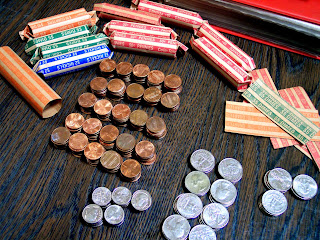
You don't have to pay them a fortune, but you should pay them for doing some chores, but not all chores. It is a good idea that children have a set of chores that are routine, but if they want to earn an allowance, then give them extra chores to do. A good stipulation is that 50 percent of what they make goes into their savings account. It is difficult for children to save and reach saving goals when money comes in infrequently.
Set Them Up to Succeed
Sit down with them and talk about their financial goals. If you have a 10-year-old and they want a car when they are 16 then help them set up goals to make that happen. Talk about end goals and then make smaller savings goals so that they can see the progress. Letting them succeed will drive home all the lessons about handling money well.
It is important to talk about money, but it is also equally important that money not become the primary focus of their world. Being frugal, learning to save, and building wealth are healthy goals. A total focus on money is not all that healthy. Bridge the difference with understanding and knowledge and avoid greedy behaviors.


 Give Them Chores and Pay Them
16 Comments
I've got a few piggy banks for each one of my children. I give them money whenever they do chores, do something good on report cards. What I like to do is keep a piggy bank for each of my children hidden in my house. This is where I give them money for doing good in school, accomplishments and such. And I plan to give them that as an extra gift on their day of graduation. The other piggy banks they have is for their own spending for miscellaneous items and such.
ReplyDeleteThat's so smart! I don't know how you do it! I can even keep up with one piggy bank let alone two for each kid. wow you're good.
DeleteI really like this idea as well. While the child does not know they are being rewarded, it allows them to reflect on the good they did when they finally get the gift.
DeleteI thought about doing this with my two kids. I was hoping they would be able to use the money to buy a car when they turn 16 or 18, but we'll have to see how good they actually are :)
DeleteMy 18 year old just started wanting a bank account...but I am afraid that his reasons to have an account is for the ease of spending. [-(
DeleteMaking a big deal about it is the thing to do. Make it sound like that money can help them buy a car when they turn 16, or help them pay for stuff they really want. Money adds up, and even though it may not be a ton of money, it can still help in buying that first car or buying stuff when you're in need.
ReplyDeleteIt's all great with normal kids. I don't have a normal kids that wants anything, not even to drive or make money. Thank god for my other two normal kid.
DeleteI've gone the chore's route for my children. They get paid for doing them and they can use the money for anything. I try to let them know it'd be best to save the money, but in reality it's not easy to stop a child from spending money they just earned. It's probably one of the best ways of teaching responsibility though.
ReplyDeleteI think this is the most common way to reward your child. Simple chores to us can seem like major tasks to them and when they are rewarded, it instills a good sense of responsibility.
DeleteJust save what you can and make sure your children follow suit. I like to show my kids that the best way of saving money is to just save small amounts here and there. If you have change, save it, if you get $5 from a birthday, save it. And so on. That's what I like to do anyways.
ReplyDeleteYes. I was not a saver until I was 18/19. Whatever little money I made back then, I spent. Once I get the idea of savings, it actually became a challenge and thrill to see how far I can stretch the dollars.
DeleteStarting children young is the best thing to do. They feel that collecting the money is best for them instead of spending it on candy or toys. My son was able to save up to $350 or so before the age of 15. All by keeping change and so on. He did take some money out if needed, but he mostly saved it. He's actually still saving money this way too, but he puts it in the bank after he saves up enough.
ReplyDeleteWow,,,I was really proud of my son one time when he saved all his money and told me how much he had. Since he started driving, he has not been able to save a dime. @-)
DeleteI, personally like the chore jar idea. That allows the child to build up some sort of responsibility rather than trying to resist it and gives them a reward for doing so.
ReplyDeleteYes, but the problem is the chores I give my kids to do, I have to redo them...so is it really worth it?
DeleteI think that it is very important to teach a child the value of money at an early age. They should understand that when you work for something, you get paid and saving that money allows you to get the things that you want in life. Nice post!
ReplyDeleteHave a thought? Please leave a comment here, and I will return as soon as possible. Thanks - If you have a minute, why not check-out the sibbling of Self Sagacity.com Blogger Broadcast. Extra Links = Spam = Delete.